
New Orleans Saints
New Orleans Saints Set to Replace Marshon Lattimore: A Look at the 2025 NFL Draft and the Pursuit of Will Johnson…

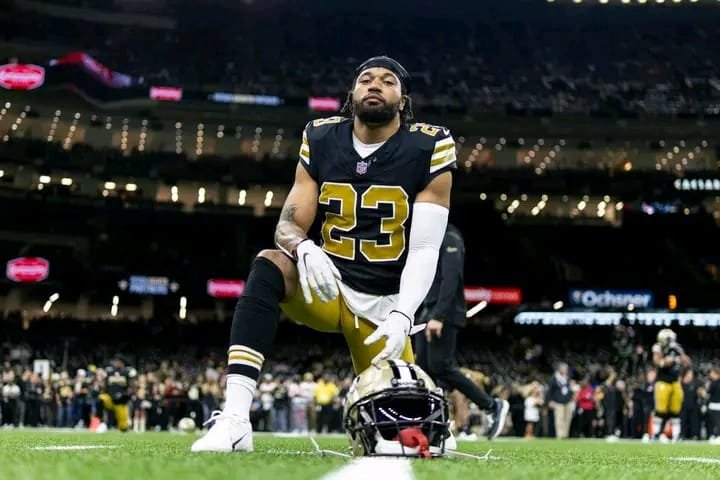
New Orleans Saints Set to Replace Marshon Lattimore: A Look at the 2025 NFL Draft and the Pursuit of Will Johnson…
The New Orleans Saints are in the midst of one of the most critical offseasons in recent memory. Following another disappointing season, the Saints found themselves once again out of the playoff picture, marking their fourth consecutive year of missing the postseason. With injuries and a stagnant offense playing a significant role in their inability to compete at the highest level, the Saints now face the daunting task of rebuilding a roster that has more holes than it has had in years.
One of the most pressing issues the Saints need to address this offseason is the defensive backfield, specifically the cornerback position. With Marshon Lattimore, one of the NFL’s premier cornerbacks, traded away for a third-round pick, the team finds itself in need of a true shutdown corner. Enter the 2025 NFL Draft, where the Saints hope to find a worthy replacement for Lattimore.
The 2025 NFL Draft: A Fresh Start for the Saints
The New Orleans Saints have been in a state of flux ever since the departure of head coach Sean Payton and the decline of their once-stellar defense. This past season, despite a promising start, injuries and roster instability kept the team from finding any real rhythm, leaving them with a 5-12 record and a hole in the defensive backfield that will be hard to fill.
As the Saints look ahead to the 2025 NFL Draft, they are faced with the challenge of balancing their needs for both offensive and defensive improvements. However, according to ESPN’s Mel Kiper, the Saints’ most urgent need in this draft is at cornerback. With Lattimore now out of the picture, Kiper believes the Saints will use their valuable ninth-overall pick to select Will Johnson, a rising star cornerback out of Michigan.
Kiper is adamant that Johnson has the tools necessary to step into the NFL and contribute right away. “Johnson—who reads the quarterback incredibly well and has the quickness to finish plays with takeaways—could be the Marshon Lattimore replacement in New Orleans,” Kiper writes in his latest mock draft. “They have to find Day 1 starters in the draft, and Johnson would fill a big hole.”
Will Johnson: The Cornerback New Orleans Needs?
Will Johnson, who has been gaining attention as one of the top cornerback prospects in the 2025 draft class, has the potential to be a true game-changer for the Saints. Standing at 6’2” and weighing in at 200 pounds, Johnson possesses the size and physicality that teams covet in a cornerback. His ability to handle both bigger receivers and quick, nimble ones makes him versatile enough to excel in various defensive schemes, an asset the Saints sorely need after Lattimore’s departure.
Johnson’s skill set, however, goes beyond his size and athleticism. A player with high football IQ, he is known for his ability to read the quarterback’s eyes and predict where the ball is going, making him a prime candidate for creating turnovers. His instincts in zone coverage are equally impressive, as he can anticipate routes and pounce on passes before receivers even have a chance to make a play.
While Johnson has shown he can thrive in man-to-man coverage, his agility and quickness also lend themselves well to the Saints’ typical zone-based defensive schemes. The Michigan product’s footwork and ability to mirror receivers throughout their routes make him one of the most polished cornerbacks in this draft class, even though he may need to fine-tune his overall technique and tackling ability.
Despite being a standout in college, Johnson’s game is not without its flaws. Like many young cornerbacks, he can struggle with his fundamentals at times, particularly against elite receivers who know how to exploit slight missteps. His tackling, though solid, is also an area that will need improvement. However, with the right coaching and development, Johnson has the potential to become a lockdown cornerback in the NFL—a player that the Saints could build their secondary around for years to come.
The Saints’ Cornerback Depth: What Does the Future Hold?
The idea of replacing Lattimore with a prospect like Will Johnson brings both excitement and concern to Saints fans. The team’s decision to trade Lattimore has already raised questions about the direction of the franchise, and with the cornerback’s departure, New Orleans finds itself with a major void to fill. While Johnson appears to be a strong candidate, the question remains: Will the Saints be able to pair him with other cornerbacks to solidify the secondary?
As of now, the Saints’ other starting cornerback, Paulson Adebo, is an impending free agent. Adebo, a former third-round pick, has shown flashes of promise during his time in New Orleans but remains unproven as a consistent top-tier starter. The Saints have limited financial flexibility this offseason, sitting $52.3 million over the salary cap, so retaining Adebo could prove challenging unless the team works to restructure contracts or make other financial moves.
If Adebo is re-signed, he could form a formidable duo with Johnson, especially if the rookie can immediately transition to a starting role. However, if Adebo walks in free agency, the Saints may be forced to rely solely on their rookie cornerback to fill a significant void, making the need for a reliable veteran presence even more crucial.
What’s Next for the Saints in the 2025 Draft?
While the cornerback position is the Saints’ most glaring need, the 2025 draft is filled with other areas that the team will likely address. The offensive line, which has struggled at times to protect quarterback Derek Carr, is another priority. The Saints are likely to target a potential left tackle or guard early in the draft to shore up the protection in front of their signal-caller.
Some have speculated that the Saints might use their first-round pick on a prospect like Will Campbell, an offensive tackle from LSU who has impressed scouts with his size, strength, and athleticism. Given the volatility of the Saints’ cap situation, this move could help stabilize the line and give Carr a more solid foundation moving forward.
However, assuming they draft Johnson with the ninth-overall pick, the Saints will need to look for solutions in other positions with their remaining selections. With the team’s salary cap constraints, finding starters and contributors on a budget will be key to the Saints’ success in 2025 and beyond.
The Saints’ Road Ahead: A Rebuilding Effort in the Making
The decision to trade Marshon Lattimore signals a shift in philosophy for the New Orleans Saints. After years of being a perennial playoff contender, the franchise is now in the midst of an overhaul. While some fans are concerned about the lack of direction following a disappointing 2024 season, the team is attempting to balance both the need for veteran leadership and the desire to build through the draft.
Selecting Will Johnson as Lattimore’s replacement is the first step in a long process, but it’s a promising one. If Johnson can develop into the player many expect him to be, the Saints could find themselves with a new defensive cornerstone for the next decade. Coupled with key additions to the offensive line and perhaps more pieces in the secondary, New Orleans may be on its way back to relevance sooner than expected.
The Saints’ future rests on hitting on their draft picks, especially with their current salary cap constraints and limited flexibility in free agency. Fans can only hope that the team’s front office, led by general manager Mickey Loomis, will make the right calls, starting with a top-tier cornerback like Will Johnson. If the Saints can strengthen their defense while continuing to develop their offense, the window for a successful rebuild could be open sooner than anticipated.
As the 2025 NFL Draft approaches, all eyes will be on the New Orleans Saints and their first-round pick. Will Johnson could be the new face of the defense, and the team’s selection could prove to be one of the most important moves in the post-Lattimore era.

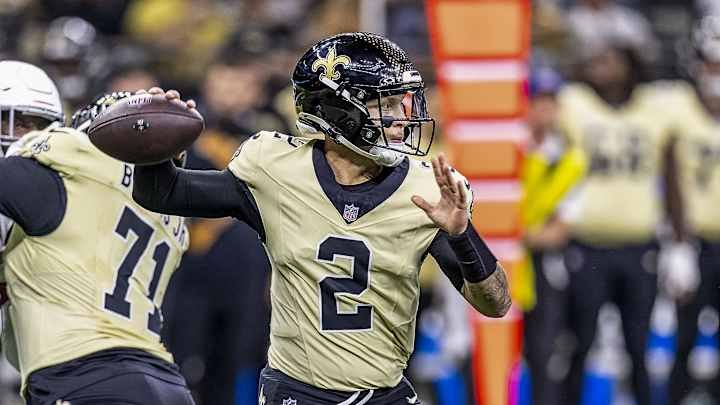
Saints are wasting Spencer Rattler’s surprising start to the season
The New Orleans Saints were projected to lose their first four games of the season by many. What wasn’t expected is Spencer Rattler playing well enough to win in both of the first two games. Unfortunately, the Saints are right where everyone predicted they’d be, 0-2. They’ve wasted winning performances by Rattler, and the Saints’ biggest obstacle has been themselves.
No one expected Rattler to play as well as he has. This isn’t to say he’s a top-5 quarterback, but Rattler has played well enough to fit the “wins aren’t a quarterback stat” argument. It hasn’t been perfect, but it’s hard to lay blame at his feet for either loss. Matter of fact, Rattler had the best game of his career against the San Francisco 49ers.
In both weeks, the Saints have struggled to get off the ground early. In both weeks, the Saints had the ball with a chance to win in the final two minutes. In both weeks, the Saints failed to complete the comeback. Wash and repeat.
Early mistakes prove costly for the Saints
You can point to Juwan Johnson not catching the ball in the end zone versus the Arizona Cardinals. There are multiple moments that heavily impact a game, but with a play of that magnitude at that juncture of the game, it’s hard to find a bigger moment. Against San Francisco, there isn’t necessarily that one moment to point to.
The Saints continuously kept stubbing their toe with errors in critical moments. Those errors came in different forms. You could point to penalties, points being left on the board, keeping drives alive. Let’s point at all of them, as those errors were the Saints’ downfall.
For the second week in a row, penalties have proven costly. A week ago the Saints had the same amount of penalties as points, 13. The penalties actually outnumber the points if you count the penalties that weren’t accepted.
Those 13 infractions tied the Tennessee Titans for the most penalties in the NFL in Week 1. The Saints brought referees to practice this week, but the penalties continued, in critical moments at that. The Saints gave up two first downs on third down due to flags in the secondary. The Saints also took two first downs away from themselves due to penalties.
It wasn’t just penalties. Johnson had a few drops early. There was no defender around this time. Blake Grupe missed yet another “sure thing.” These are players you’re going to have to count on, and they’re making critical mistakes. That’s not winning football, and you can’t put that on the QB. Worst part about it is the difficulty is likely about to go up. That makes the missed opportunities even harder to swallow.
Saquon Barkley Sounds Off on Former Teammate Daniel Jones’ Early Success With Colts
The Daniel Jones era of the New York Giants was forgettable, to say the least. Even though he showed flashes of promise at times and had Saquon Barkley coming out of the backfield, the Giants never got going, but now he’s begun turning things around while starting fresh with the Indianapolis Colts.
New Orleans Saints
Saints legend Drew Brees offers praise for Spencer Rattler as the team’s starting QB
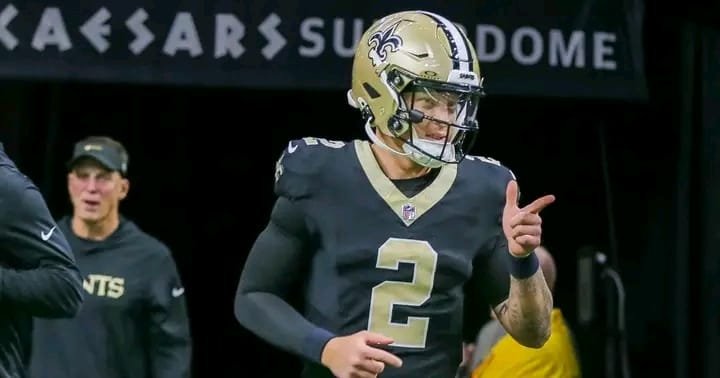
Saints legend Drew Brees offers praise for Spencer Rattler as the team’s starting QB
Spencer Rattler has one very important admirer.
Making an appearance on WWL-AM Thursday with Bobby Hebert, New Orleans Saints legend Drew Brees said he’s really liked what he’s seen out of Rattler in the start to the 2025 season.
“Spencer is a really dynamic player,” Brees said. “Stature wise, he’s a lot like me from the perspective of you’re not the tallest guy, but you’re athletic, you can move. I love the way he throws the ball. He’s made some plays running the football that have been really impressive over the last couple of weeks, getting some key first downs, breaking tackles.
“Just some gutsy performances. It hasn’t resulted in wins, but we’ve been right there.”
Rattler earned the Saints starting quarterback job out of training camp, beating out second-round pick Tyler Shough. He is one of eight quarterbacks who have started a game for the Saints since Brees retired following the 2020 season.
A fifth-round pick in last year’s draft, Rattler is still looking to lead the Saints to his first win as a starting quarterback. New Orleans went 0-6 with him as a starter last season, albeit with an extremely depleted roster, and is off to an 0-2 start this season.
But Brees stressed to be patient with the young quarterback, emphasizing the competitiveness the Saints have shown to start the season with Rattler operating the offense: New Orleans has had chances to tie or take the lead in the closing minutes of each of their two losses to start the season.
“They’re right there, I mean literally right on the cusp,” Brees said. “… They just have to find a way to break the seal, get that first win, start developing some confidence and momentum.”
Through two games this season, Rattler is completing 65 % of his passes with three touchdowns against zero interceptions. As a runner, he’s added 43 yards on eight carries, with two of those runs converting critical down and distance situations last week against the 49ers.
“When I watch Spencer play, he’s got all the traits,” Brees said. “He’s got some moxie, he plays with some swagger, kind of a chip on his shoulder. The guys seem to like him and play hard around him. He can make all the throws, he can make plays with his legs, he’s not afraid to take off and run and lower his head to go get the first down.
“For all those reasons, I think we have to be patient with him and recognize that, man, it’s going to happen, and hopefully it happens soon.”
New Orleans Saints
Saints set to sign new lease to stay in the Superdome. Here’s a look inside the deal.
Saints set to sign new lease to stay in the Superdome. Here’s a look inside the deal.
A long-term deal between team officials and Gov. Jeff Landry’s allies on the Superdome Commission is expected within days.
The New Orleans Saints and Gov. Jeff Landry’s team are closing in on a new long-term lease of the Caesars Superdome that aims to keep the franchise rooted in New Orleans for at least another decade.
The deal, which three sources familiar with the talks say could be announced as soon as next week, culminates more than a year of grueling, often contentious negotiations between the Saints and the Louisiana Stadium and Exposition District, the board that oversees the state-owned Superdome.
Neither the Saints nor the LSED, known as the Superdome Commission, have announced specifics publicly. But the sources close to the negotiations say the agreement calls for a 10-year lease followed by four 5-year extensions, with the Saints retaining the right to exercise each extension. If all the extensions are agreed upon, it would run through 2055
The deal adds a new provision—absent from the Saints’ current lease—requiring arbitration and potential “equitable damages,” measures designed to discourage any future owner from moving the team out of New Orleans. The exact amount of that relocation penalty hasn’t been finalized, but the sources said it could reach $250 million.
The deal also involves other key provisions, which could be modified as the sides hash out final details. Among them: the Saints’ share of revenues from stadium concessions on game days; terms of the state lease for offices at Benson Tower; and other future revenue streams and costs.
The two sides have wanted to sign the lease by Sept. 17 because that’s the day an NFL owners sub-committee on special events will meet to begin considering who will host Super Bowls beyond 2028. After receiving broad acclaim for hosting the game in February, New Orleans hopes to be invited to bid on the 2031 Super Bowl. But it can only do so if the Saints have a signed lease agreement in effect for the year of the game, according to league policy.
The new agreement will end a negotiation that began shortly after Landry took office in January 2024. Saints officials negotiated a similar lease extension with officials from the administration of Gov. John Bel Edwards but didn’t reach a long-term agreement before his term ended.
Saints, state closing in on long-term lease extension, major Superdome renovation
Exterior shots of the Louisiana Superdome colored with lights for Carnival and the BCS game in New Orleans, on Jan. 4, 2008.
CHRIS GRANGER
“We remain optimistic that a final agreement will be reached soon and look forward to announcing it at the appropriate time,” Greg Bensel, a spokesperson for the Saints, said in a text. “Until then, negotiations with the State remain ongoing, and it would be premature to comment on specific deal points.”
Superdome Commission officials also declined to comment on the deal talks.
Shane Guidry, a businessman who is a close advisor to Landry, declined to comment on specifics but said agreement on lease terms is near. “We’re at the finish line,” he said. “We want to get it done for the Saints, the taxpayers, the state of Louisiana, the NFL, everybody.”
A closely watched deal
The Superdome lease is always closely watched by business and civic leaders, but for Saints fans the real question is what it means for the team’s long-term future in New Orleans.
This round of talks carries added weight: Because the lease could run through 2055, it will likely be in place past Gayle Benson’s lifetime — the trigger for an NFL rule that will require the team to be sold to a new owner.
Landry’s negotiating team has sought to bolster the state’s legal position in keeping the Saints here for the foreseeable future, the sources said.
Benson, 78, has vowed to keep the team in New Orleans while she is the owner. And in a series of 2021 interviews to discuss the Saints succession plans, Dennis Lauscha, the Saints’ president and the executor of the Benson estate, committed to keeping the Saints in New Orleans. He has also said that the terms of this lease negotiation would be crucial to keeping a future owner here. But it remains unclear whether the new deal will have strong enough language to prevent the team from being moved by the team’s next owner beyond those 10 years.
Lauscha has been the lead negotiator for the Saints, facing off with Rob Vosbein, appointed by Landry to serve as the Superdome Commission’s chair. Vosbein is a private attorney for Guidry. Also negotiating for the state has been Shawn Bridgewater-Normand, a lawyer and the wife of radio host Newell Normand.
The Superdome Commission is expected to formally approve the deal, which will replace the current agreement that consists of a 15-year lease followed by a 5-year extension that ends in 2030.
Deals aim to avoid relocation
The price of professional sports teams has risen dramatically in recent years, making ownership the domain of multibillionaires. Forbes valued the Saints at $5.3 billion in its annual analysis of NFL franchises, a 20 percent increase from a year ago.
Lawyers and executives with experience in stadium lease negotiations in other NFL markets said that any lease deal would likely have to include ironclad legal terms and financial penalties after 10 years to make it difficult for a future owner to move the Saints.
The new lease would require a new owner who moves the team to pay state taxpayers as much as $250 million to cover most of the $300 million that the state owes in bonds for the recent Superdome renovation, said the people close to the negotiations. That penalty steps down sharply after the first 10 years.
Mark Poloncarz, who has negotiated two lease extensions with the Buffalo Bills as the Erie County executive, said a more important question is whether the new lease includes language that would allow the state to go to court in New Orleans to prevent a new owner from moving the team.
“Unless there’s some clause that allows the community and the state to keep the team there, they could be gone after 10 years,” Poloncarz said.
In 2021, Benson said her instructions to Lauscha are clear when it comes to new ownership.
“That’s going to be one of our stipulations when we sell the team — that it stays here,” said Benson at the time. “Dennis won’t sell it to another person that wants to take it away.”
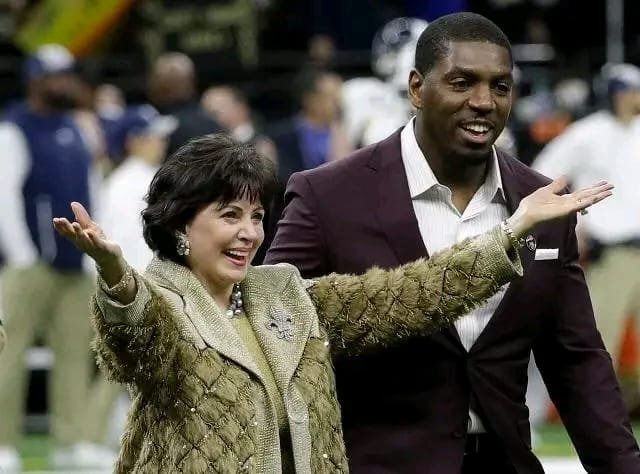
Louisiana Governor Jeff Landry, center, and his wife, Sharon LeBlanc, talk with New Orleans Saints and Pelicans owner, Gayle Benson, during the King’s Luncheon held at the Kennedy Center for the Washington Mardi Gras on Thursday, January 25, 2024. (Photo by Chris Granger, The Times-Picayune)
(Photo by Chris Granger The Times-Picayune)
While negotiators aren’t yet publicly outlining the terms of the new lease, two recent stadium deals offer some comparative terms.
In 2023, the Buffalo Bills signed a 30-year lease with language that discourages a new owner from moving the team. A year later, the Jacksonville Jaguars also signed a 30-year deal with similar terms.
Nellie Drew, a professor at the University at Buffalo School of Law who has studied the leases of the Bills and other teams, said cities and states often seek clauses in the leases that would make it harder for teams to relocate.
One defense is a legal term known as “equitable relief,” which allows the government to file suit to block the team from leaving. The Bills agreed to allow this type of lawsuit in the lease and to have the lawsuit be heard in a local or federal court in the Buffalo area.
“There is no way any judge in western New York is going to let the Bills walk,” Drew said.
If a judge did allow the team to leave, the lease requires the Bills to pay back taxpayers the full $850 million they spent to build a new stadium if the departure takes place within the first 14 years of the lease signing. In future years, the amount the new owner would have to pay taxpayers would drop by 6.25% per year. By year 30, that amount would reach zero.
In the Saints’ case, taxpayers spent about $380 million to pay for the most recent renovation of the Superdome, while the Saints ponied up an additional $180 million.
The financial penalty in the new lease of up to $250 million for relocating the Saints would probably not be a deterrent for a new owner given the vast sums required now to purchase a team, industry experts said. But it’s a significant change from the current lease, which did not have a similar financial penalty.
That lease took effect in 2010. The deal included an $85 million stadium upgrade that gave the Saints more ways to make money off games in the Superdome while capping direct subsidies to the team at $6 million a year. It also transferred naming rights at the stadium to the team, which the Saints have since sold to Mercedes-Benz and Caesars for millions of dollars annually.
In lieu of constructing a new stadium, which can cost billions of dollars, the sides have continued to pour money into upgrading the Superdome, which opened in 1975 and is the fifth oldest stadium in the NFL. The state completed a $560 million renovation of the facility in 2024, in time to host Super Bowl LIX this year. It was the stadium’s eighth Super Bowl, the most of any venue in NFL history.
New Orleans Saints
Kellen Moore must fix massive issue that he’s responsible for as soon as possible if the Saints want to win any games going forward
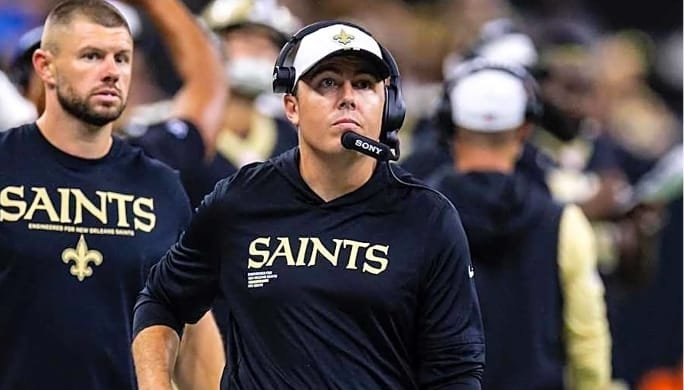
Kellen Moore must fix massive issue that he’s responsible for as soon as possible if the Saints want to win any games going forward
Fans of the New Orleans Saints have plenty of emotional ammunition to be frustrated with officiating over the years. For the black and gold in Week 1 of this season, against the Arizona Cardinals, they simply put themselves in horrible situations and forced the referees to hurt them even further.
New Orleans limped to just thirteen points in Kellen Moore’s debut as the team’s head coach. While there was the occasional bright spot on that side of the gridiron for New Orleans, the Saints couldn’t stop making small errors that caused some yellow laundry to hit the field.
Offensive penalties destroy New Orleans’ chances in Week 1
The Saints were whistled for sixteen penalties in Week 1 against the Cardinals. Thirteen of those were enforced, while the other three were declined. A whopping eleven of the penalties were called against the Saints offense, the unit that Kellen Moore is most responsible for – even as the head coach.
More ridiculously, eight of those eleven flags on the offense were pre-snap penalties. The Saints had three false starts, two illegal formations, two illegal shifts, and one offsides for that unit against Arizona, via Jeff Duncan. That is nearly impossible to fathom, but the Saints consistently shot themselves in the foot to make life harder on themselves.
Moore and his coaching staff must clean these issues up as soon as possible. The Saints do not possess enough talent on either side of the ball to overcome these sort of unforced errors. If New Orleans continues this sort of trend, it will be yet another frustrating season for Saints fans.
A major opportunity to build momentum for Moore’s offense and overall team was stymied by sloppiness, and that’s gotta change sooner rather than later. New Orleans’ task doesn’t get any easier next week when they face the 1-0 San
New Orleans Saints
FOREVER IN SAINTS HISTORY: Alvin Kamara Delivers 1,000th Superdome Touchdown, Giving New Orleans a Moment to Cherish

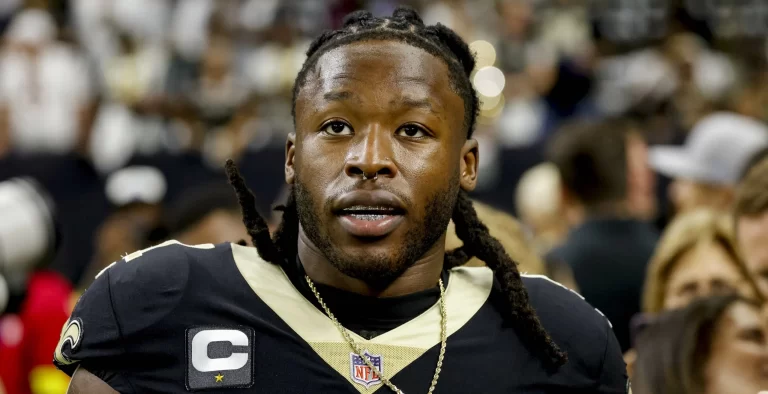
FOREVER IN SAINTS HISTORY: Alvin Kamara Delivers 1,000th Superdome Touchdown, Giving New Orleans a Moment to Cherish
The Caesars Superdome is more than just a stadium. For the people of New Orleans, it is a cathedral of resilience, joy, and unforgettable memories. From the deafening noise of the Dome Patrol years to the miracle ride of 2009, the building has witnessed generations of heroes carving their names into Saints history. On Sunday, even in defeat, another unforgettable chapter was written when Alvin Kamara delivered the 1,000th touchdown ever scored by the Saints inside their hallowed home.
Yes, the scoreboard read 20-13 in favor of the Arizona Cardinals by the final whistle. But if you were inside the Dome — or even just watching from home — there was a moment in the second quarter that made you pause, smile, and realize you were witnessing something that will forever live in the franchise’s story.
Kamara’s Milestone Run
With the Saints facing a third-and-three early in the second quarter, the offense needed a spark. The Cardinals defense had done its job so far, limiting Derek Carr and the passing game to short gains. Then, in a flash, Alvin Kamara reminded everyone why he has been the heartbeat of this offense for nearly a decade.
Taking the handoff, Kamara cut left, found daylight, and accelerated through a gap that only he could see so clearly. The run wasn’t just efficient — it was vintage Kamara. Smooth strides, impeccable vision, and that signature ability to make defenders look like they’re running in slow motion. As he crossed the goal line and celebrated with his teammates, the crowd roared louder than it had all afternoon.
At that moment, fans weren’t just cheering a touchdown. They were witnessing history. That 18-yard dash wasn’t only Kamara’s 87th career touchdown; it was officially the 1,000th touchdown scored by the New Orleans Saints in the Superdome.
Why This Touchdown Matters More
Football milestones come and go. A player scores a certain number of career touchdowns. A team reaches a statistical marker. But the 1,000th touchdown in the Superdome? That’s different.
Why? Because the Superdome isn’t just another NFL stadium. It is a living, breathing symbol of New Orleans. It has hosted Super Bowls, college championships, and concerts that shook the world. But more importantly, it has been the stage for Saints football since 1975 — the good, the bad, and the unforgettable.

From Archie Manning to Drew Brees, from Marques Colston to Michael Thomas, the Dome has seen legends come and go. It has carried the city through storms both literal and figurative. To hit 1,000 touchdowns in that building means you are not just adding to a box score. You are adding to a shared memory that belongs to every fan wearing black and gold.
For Alvin Kamara to be the man to deliver that moment feels perfectly fitting. He has been the face of the Saints’ offense since Drew Brees retired, carrying the torch of excitement and playmaking that keeps fans believing in better days.
Kamara’s Place in NFL History
The milestone wasn’t just about the Saints or the Superdome. It also added another jewel to Kamara’s personal crown.
With 87 career touchdowns, Kamara is now tied with Hall of Famer Lance Alworth for 53rd on the NFL’s all-time list. To put that into perspective: Alworth was an icon of the 1960s, a receiver so dominant they called him “Bambi.” For Kamara to match his number in today’s game — as a running back who does damage both on the ground and through the air — speaks volumes about his versatility and sustained excellence.
And here’s the kicker: Kamara is still just 29 years old. He has plenty of time to climb that list, possibly even cracking the top 25 before his career is over. Saints fans have known for years that Kamara is special, but achievements like this force the national spotlight to acknowledge it too.
The Bittersweet Side
Of course, milestones don’t erase results. The Saints lost 20-13 to the Cardinals, dropping their season opener and raising familiar concerns about the offense. Despite Kamara’s heroics, the passing game sputtered. Derek Carr and his receivers struggled to connect on big plays, and drives stalled too often in enemy territory.
It’s a story Saints fans know all too well. The defense did its job, holding the Cardinals to just 20 points, but without consistent offensive rhythm, it wasn’t enough. That’s why Kamara’s touchdown, as magical as it was, also felt bittersweet. It gave the Dome a reason to explode, but it didn’t translate into victory.
Still, if there’s a silver lining, it’s that milestones like these can become rallying points. Seasons are long, and every team needs moments to hang onto when the going gets tough. Kamara’s 1,000th touchdown could serve as one of those reminders that greatness is still present in New Orleans — and worth building around.
The Legacy of the Superdome
Think about what the 1,000 touchdowns represent.
They are Archie Manning scrambles in the late ’70s, Jim Mora’s gritty teams of the ’80s, the Dome Patrol striking fear into opponents, the heartbreaks of the ’90s, and the rebirth of the 2000s under Sean Payton and Drew Brees. They are Deuce McAllister breaking tackles, Marques Colston stretching out for the end zone, Reggie Bush electrifying crowds, and Steve Gleason’s unforgettable punt block that became a symbol of hope.
Every touchdown tells a story. Every one of those 1,000 scores is a piece of the larger tapestry that makes Saints football unique. Alvin Kamara just added his name to the most recent stitch in that rich quilt of history.
What’s Next for the Saints
The loss to Arizona is just one game in a long season. For head coach Dennis Allen and the offense, the task ahead is clear: find consistency, especially in the passing game. If Carr and his receivers can find a rhythm to complement Kamara’s brilliance, the Saints can still contend in a wide-open NFC South.
Meanwhile, the defense will continue to anchor the team. Led by veterans like Demario Davis and Cam Jordan, the unit is good enough to keep games close. What Saints fans hope is that the offense can catch up before too many more “bittersweet milestones” pile up.
A Moment to Cherish
In sports, results matter. Wins and losses define seasons. But milestones define legacies. Alvin Kamara’s 1,000th touchdown at the Superdome will be remembered long after the disappointment of a Week 1 loss fades.
For fans, it was a reminder of why they love this team, this city, and this stadium. It was a reminder that even when the Saints stumble, moments of magic are always possible in the Dome.
Kamara didn’t just score a touchdown. He carved his name into the very walls of the Superdome’s history, joining a line of legends who gave New Orleans reasons to cheer, cry, and believe. And that, perhaps, is worth celebrating more than any single win or loss.